
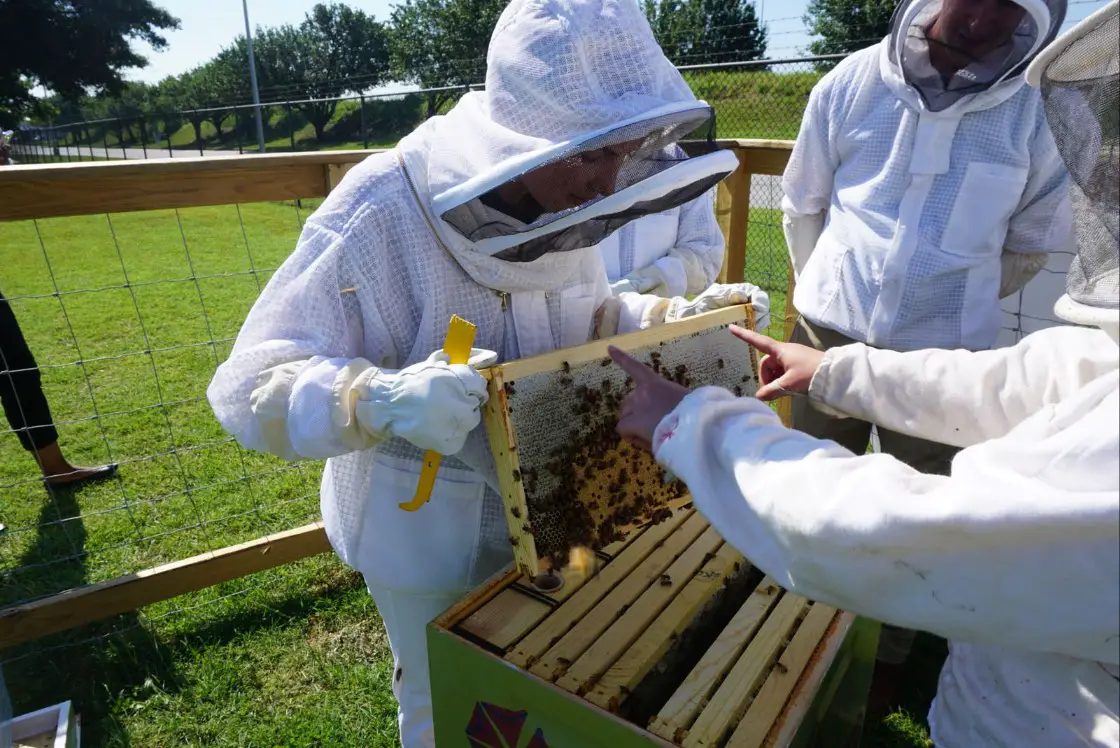
You might have guessed it, beekeeping is an activity that is not problem free. Before I started in beekeeping, I knew about some of them but to be honest, I have discovered quite a few more as I gained experience. I asked my fellow beekeepers and it seems that there are a few common beekeeping problems or challenges that every new beekeeper faces. In this post, I will share these problems and suggest a few solutions.
Common beekeeping problems and challenges for beginners are:
- Uncertainty where to get knowledge
- Getting your first bee colony
- Confusion about beehive placement
- Floral source needed for bees
- Handling queen bees
- The health of your bee colony
- Honey prices and market demand
- Nectar dearth
Uncertainty where to get knowledge
Like every other activity, beekeeping has a learning curve. But as I learned from the experience, it is important to have a certain amount of knowledge before starting out. Initial knowledge saves you time, money and most important helps your bees to get stronger.
Beekeeping is a very old practice that has been passed through the generations. Today we have the opportunity to read everything we need to know or to get an online beekeeping course so we start off with beekeeping being a bit more confident.
Beekeeping is an activity which requires constant learning. Season after season I learn something new about bees and beekeeping. And the reason for this is that beekeeping always has its challenges, and it doesn’t matter how much experience you have. There is always something (a disease, a nectar dearth, weather, market challenges) that keep us humble.
If you are starting out, I would recommend a few things. Firstly, get a book about beekeeping, complete an online or a live course and join the local beekeepers association.
The book and the course on beekeeping will give you the initial knowledge needed to start your journey and contacts in beekeepers association will help you out when you need a hand or have a question to which you cannot find an easy answer. So once you join the association, make sure to start networking with more experienced beekeepers.
And then just learn as you go. Read more about bees, observe them and keep learning.
Getting your first bee colony
Another area where new or future beekeepers struggle is getting bees. You have made the decision to start with beekeeping, you have done all the research you need, took some courses. And now you just need to get your bees. But where and how?
You are not alone, we all faced those doubts. There are a few different ways to acquire bees:
- Trapping wild swarms
- Buying nucs locally
- Buying packaged & shipped bees
If you are just starting out, I would advise you against trapping the swarm by yourself. Unless you have a more experienced beekeeper to help you out or you feel you are really confident around bees, then go for it. But it might be quite an intimidating experience for a new beekeeper to do it all by himself.
The best way to get bees for a new beekeeper, in my opinion, is buying a nuc locally from fellow beekeepers. In this way, your bees will not be shipped which is usually stressful and you will also meet a fellow beekeeper who might help you out in times of need.
Confusion about beehive placement

Deciding where to put your beehive is one of the most common challenges a new beekeeper has. If you have a lot of years in the activity you have certain knowledge about it. We are living in a time where climate change, chemical products, and the economy has a real impact on our activity.
New beekeepers tend to start in their yard. This is a very easy way to start if you live outside of the city, but if you live surrounded by neighbors, or near a road, it has its challenges. Some books and websites tell you can place your beehive almost anywhere because bees travel a lot to get their nectar.
Sometimes I wonder if this person has ever been near a beehive in his or her life. Yes, bees fly and travel miles to get their nectar, and that is why it is a challenge. No apiary should be placed where they cause a potential risk to other people, animals or bees themselves.
You need to find a place that has a good floral source. It should also protect your bees from predators and vandals, have a near water source with drainage and a good amount of sun.
Floral source needed for bees
You might think that if a field is full of flowers, our bees are going to love it. But let me ask you, do you like all the food available in the supermarket? I would guess no? Bees are the same, they do not collect nectar from all the flowers that grow in your backyard.
There are an estimated 20000 species of bees in the world, and the honey bee is only one of them. Different types of honey bees that evolved to pollinate plant species within their natural habitat. For example, the bees in Italy are attracted to citrus flowers. If a bee didn’t have a citrus flower in their natural habitat, it is going to ignore that flower. If you take the Africanized bees in Brazil that pollinate the Amazonas and take them to the south of Brazil to pollinate Eucalyptus, they are not going to survive.
Knowing about the plant species and native varieties around you is going to be helpful in your beekeeping journey.
Handling queen bees
A beehive cannot survive without its Queen. And many beginning beekeepers don’t notice when their colony is queenless. Usually because of the assumption that the colony behavior is going to change dramatically. When a beehive is queenless, you are not going to notice a change in the colony behavior right away.
There is going to be a lot of honey and traffic at the entrance of the beehive is going to be normal, because the workers without larvae to take care of, they are going to dedicate all their time to forage. When the beekeeper notices the population decrease, and if the colony has been without a queen for too long, it is already too late and the colony will die.
A queen produces nearly 2000 eggs a day. When you notice that there is no brood during the warm season, it is an indication that your beehive might be queenless. See my post about how long does it take for the queen bee to lay eggs.
Another thing that can happen is that you notice that the queen needs to be replaced. The old queen can be faltering, and not producing the same amount of eggs she used to. The behavior of the colony is not the one it should be. Or, the colony is not productive. All these signs lead you to the need to change your queen.
The good news is that there are a lot of ways that you can replace a queen and that bees, in general, have a rather high percentage of accepting a new queen. Also, the bees do a lot of work for you and they do decide themselves when a new queen is needed. And they act on it. Check out my article ‘How many queen bees are there in a beehive’ for more details on how it is done.
If you are going to introduce the new queen, be sure that the old queen is dead or gone a day before you introduce the new queen you ordered. If you wait too long to introduce a new queen, the workers are going to start laying eggs, that in the future they are going to become drones.
The health of your bee colony

Beekeeping is sometimes challenging, and as I have mentioned before, it has a learning curve. Some levels of periodic losses of colonies cannot be avoided. But keeping beehives healthy is an important component of beekeeping.
As people have moved European honey bees around the world, the bees have come in contact with exotic diseases. And as beekeepers move their colonies all through different places, diseases and parasites spread around the world.
The Varroa Mite is the number one enemy of beekeepers and bees around the world. This parasite gets stuck in your bees, they suck their blood and weaken them until bees die. They spread through the colonies and apiaries very fast. Their high reproductive potential makes them a real threat and a challenge for beekeepers. Treatment strategies against Varroa are multiple, however, you should try the natural ones first. Check out my post for details on How to get rid of varroa mites naturally
A few other threats for the bees are small hive beetles, wax moths, the foulbrood, nosema, chalkbrood, the sacbrood virus, and other diseases like the deformed wing virus. All of this parasite and diseases are a constant challenge for beekeepers and it is really important to learn how to manage the health of your apiary because its wellbeing depends on it.
The way we maintain our bee colonies has a direct impact on bee health and every beekeeper has a different way to manage it. The only thing in common is that poor management practice has an outcome of poor consequences.
Some of the advice that I follow myself and can share with you:
- Never combine a collapsing colony with a healthy one
- Never reuse the equipment used in a collapsing or the sick colony in another colony without proper sterilization
- Reduce the level of pesticide exposure that your colonies have (and we get back to the importance of picking the right place to put your colonies)
- Research, research, and research about the best management practices that other beekeepers are using

Honey prices and market demand
If you are going into beekeeping for profit, one of the main causes of beekeepers abandoning the activity is when the cost is higher than the price of the product. Beekeeping today faces a lot of challenges that we talked about it before, but the main reason why a beekeeper quits is that the market expels them. For example, last year, 30% of beekeepers in one of the most traditional honey exporters in the world, Uruguay, abandoned the activity.
If you taking on beekeeping as a hobby, you are not going to have this problem. But at some point, you are going to produce more honey than you can consume and you might want to sell some. In fact, beekeeping is considered a very sustainable way of taking people out of poverty and is supported by many governments around the world.
Honey prices vary a lot. Like every activity depends on the offer and demand. And if you are in a big honey consumer market, you might benefit or get the consequences of a drought or a flood on the other side of the world.
Research and having a strategy to sell the product is something that I would recommend once you started to produce more honey. Start selling to your friends, talk to local businesses to offer your product through them. Selling honey can be a profitable activity.
Nectar dearth
A nectar dearth is the shortage of nectar-producing flowers. And it happens generally in winter. But for a new beekeeper recognizing and managing a nectar dearth (especially the ones that happens in the summer) is a challenge. Nectar dearth in the summer is caused by drought, or a low rainfall, and excessive heat.
Among the things that can happen during a nectar dearth, besides the shortage of nectar-producing flowers, is that a strong colony might attempt to rob a weaker colony of their nectar store. A colony can be stripped of its food supply, and the fighting and dying between bees begin, opening the door to other predators, like hornets, to attack the colony until their destruction.
Another consequence is the transfer of parasites, like the varroa mite, from the weak colony to the stronger one. This is one of the reasons why a strong colony might collapse in a few weeks time. And the beekeepers are left wondering what happened.
Once you recognize a nectar dearth (see this article on how to identify nectar dearth – what is a nectar dearth and how to survive it), you can take the following measures to protect your bees:
- Feed them syrup. Avoid putting a feeder in the door of the hive, to prevent attracting other colonies. Use an internal feeder to keep the food inside the beehive
- If you are going to feed them, avoid essential oils or other products designed especially for nectar dearths. They are going to attract bees that are miles away. Put the nectar inside and don´t worry, bees are going to find the food
- Reduce entrance to the colony. Close upper entrances. If you decided to feed them or not, this should be one of the first things you do to protect the colony from others
- Do not put community feeders or wet frames near your apiary. It´s an invitation to stronger colonies near your weaker colony
Challenges will be easier once you start
I know that it might seem that beekeeping is full of challenges, especially for new beekeepers. But the thing is, all of these challenges and problems will start to seem smaller and smaller once you begin researching, learning and getting hands-on experience in beekeeping.
One of the reasons why beekeeping is a great hobby is that it is so diverse and you keep learning all the time. That’s why I love it, I hope that you will too.
Keep buzzing
P.S. Thank you for the image Delta News Hub.