
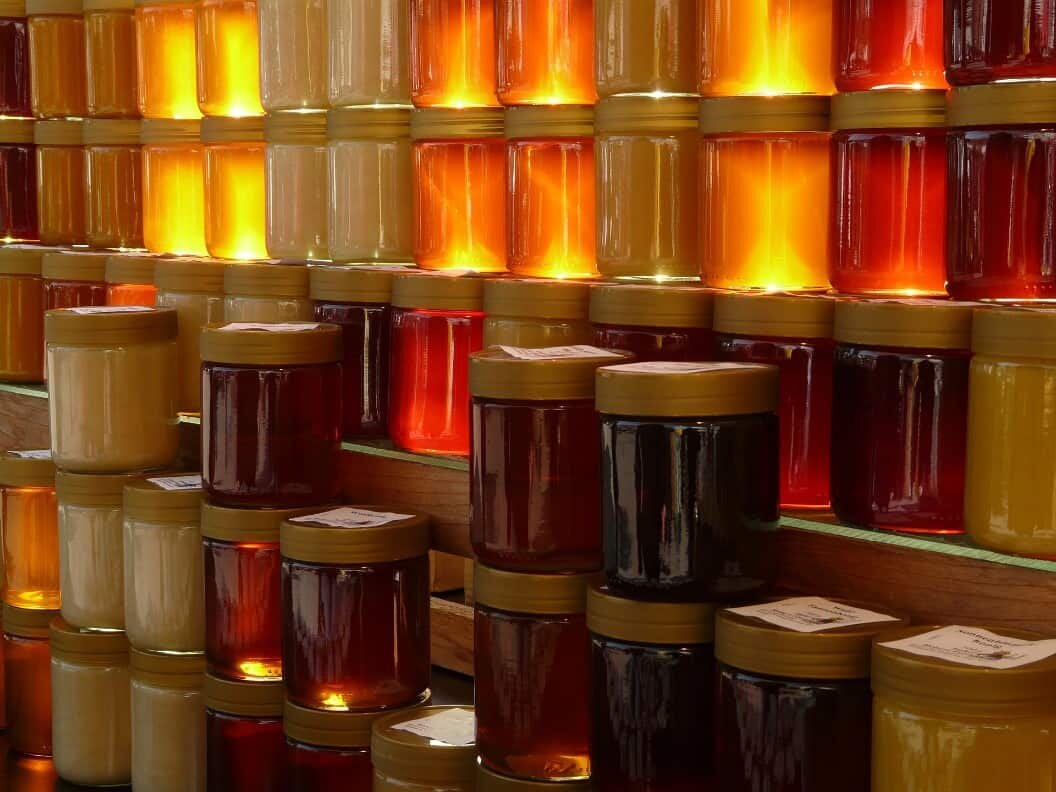
Honey is one of nature’s greatest sweet delights, kindly brought to us by busy honey bees around the world. As well as being a delicious treat, honey provides many health benefits and has a long history of use in traditional folk medicine. Just before my first honey harvest, I wondered why is honey pasteurized before being packaged and sent off to be sold at shops and supermarkets.
Why is honey pasteurized? Honey is pasteurized to help it last longer. Pasteurization slows down the granulation process that naturally occurs in honey so that it remains in a liquid state for a greater amount of time. Pasteurization also destroys any yeast cells that may be present in the honey, which removes any chance of fermentation. Pasteurization gives honey a longer shelf-life.
If pasteurization is simply intended to extend the sell-by-date of honey, are there any other benefits to this process? Are there any significant differences between honey that is left in its natural, raw state and honey that has been pasteurized? There are various questions that we can dig deeper into in order to get a clearer idea of the pros and cons of pasteurization. First, let’s look at the pasteurization process itself.
WHAT IS PASTEURIZATION?
Pasteurized foods go through the process of exposure to heat to kill microorganisms that may be present in the product. In the 1800s, French scientist Louis Pasteur (who gives his name to the process) discovered that heat treatment prevented microbes from spoiling wine and beer. This principle has since been applied to various food and drink products. When it comes to dairy products, many argue that the process of pasteurization makes milk consistently safe to drink by killing bacteria that can cause sickness in humans.
Honey is pasteurized for very different reasons than those of milk. Honey has a low moisture content and a high level of acidity. This means that bacteria and other harmful organisms cannot live or reproduce in honey, so pasteurization is not done for this purpose. However, yeast is one of the few things that can sometimes survive in honey. All nectar, which is the source of honey, contains osmophilic yeasts. These yeasts can reproduce in varieties of honey that have a naturally higher moisture content, thus causing fermentation.
WHAT IS RAW HONEY?
Honey is a sweet, viscous food that is made by bees and related insects. The honey that we eat as humans is made by honey bees from the genus Apis. Raw honey is the substance that honey bees produce from the concentrated nectar of various flowers. Raw honey comes straight from the beehive and is a tasty sweetener with many health benefits. It should be entirely unheated, unpasteurized and unprocessed.
HOW IS RAW HONEY MADE?
Honey is made by honey bees who gather nectar (a sugary liquid) from flowers. Bees use their tongues to collect this nectar, then they store it in their second stomach. Bees have two stomachs, the regular stomach and the honey stomach. This second stomach can hold nearly 70 mg of nectar when full, meaning it can weigh almost as much as the bee itself! Here, the nectar mixes with enzymes that transform its chemical composition and pH, making it more suitable for long-term storage. The worker bees will continue foraging for nectar until their stomachs are full.
After collecting their nectar, the foraging bees return to the hive and regurgitate the nectar to a younger house bee. This bee ingests the nectar and its own stomach enzymes further break down the sugars. The bees then pass the nectar from individual to individual within the hive, until the water content is reduced to about 20 percent. At this point, the last house bee regurgitates the nectar into one of the honeycomb cells. The bees make the nectar dry even faster by fanning it with their wings. As this process is happening, the sugars thicken into a substance that we recognize as honey.
At this point, the honey is ripe and ready for harvesting by the beekeeper. If using sustainable beekeeping practices, the beekeeper will always leave a portion of honey for the hive population. This is because the honey is an important source of food for the bees during the winter months when pollen and nectar are in short supply. Typically, bees produce 50-100 times more honey than they would potentially need to get through the winter months. Most times during the year, a honey bee’s diet consists primarily of nectar, pollen and water, but without a good supply of honey for the cold months when few plants are growing, the beehive may be in trouble. In one year, a colony of bees can consume between 120 and 200 pounds of honey!
WHAT ARE THE HEALTH BENEFITS OF RAW, UNPASTEURIZED HONEY?
Raw or unpasteurized honey has many health benefits that pasteurized honey lacks. In its natural state, honey contains a wealth of antibacterial, anti-fungal and antiviral properties. It has been used throughout the ages to reduce inflammation, boost the immune system and aid digestive functions. Honey that has not been pasteurized has its vitamins, enzymes and nutrients intact.
Raw honey contains approximately 22 amino acids, 31 different minerals and a wide range of vitamins and enzymes in trace amounts. It also has nearly 30 types of bioactive plant compounds called polyphenols, which act as antioxidants. These antioxidants help to protect your body from cell damage due to free radicals. Free radicals contribute to the aging process and are thought to contribute to the development of chronic diseases such as heart disease and cancer.
Raw honey can kill unwanted bacteria and fungus. It contains hydrogen peroxide which is a natural and effective antiseptic, though its strength as an antibacterial or anti-fungal varies depending on the type of honey. Honey has long been used as a folk remedy directly on cuts and wounds, as it is an effective germ killer and can aid in tissue regeneration. A certain variety of honey called Manuka honey is now being used in conventional medical settings, as it has been shown to boost the healing time of wounds and reduce infection. Remember that while all honey contains anti-bacterial properties, commercial honey is usually pasteurized and processed and may be of little to no benefit as a result.
Traditional remedies have long advocated honey as an aid to treat a sore throat or cough. In fact, honey has been shown to be a more effective cough suppressant for children ages 2-18 than dextromethorphan. The study states that “honey did a better job reducing the severity, frequency and bothersome nature of nighttime cough from upper respiratory infection than DM or no treatment”.
If you are someone who likes to see hard, contemporary science to back up any health claims, then there are plenty of further studies to be found online that have demonstrated how beneficial honey is to your health. One scientific study from 2012 concluded that “the intake of honey as food and medicine resulted in high nutritional benefit and therapeutic promise”. Another study compared the antioxidants in raw and processed honey. They found that the raw honey contained an impressive 4.3 times more antioxidants than the processed variety!
RELATED QUESTIONS
Is raw, unpasteurized honey safe for babies to eat? It is not advised to give honey to young infants under the age of one year. Infants lack the fully developed gastrointestinal tract of adults and don’t have a developed immune system to defend against infection. This leaves them more susceptible to new bacteria entering the body.
Feeding babies raw honey has been linked to infant botulism, which is a rare but potentially serious paralytic disorder. The spores of the botulism bacteria are found in dust and soil, which can make their way into honey. You should consult with a doctor before giving honey to a young child.
Is it safe to eat raw, unpasteurized honey during pregnancy? According to my wife, it is. Woman’s digestive system can handle any natural bacteria that might be found in honey. Healthy adults are not at risk for botulism from honey, even during pregnancy, and raw honey poses no risk to an unborn baby.
Are there different types of honey? Yes indeed! The taste, texture, and smell of honey can vary greatly depending on the type of flowers that the bees harvest their nectar from. For example, rosemary honey can have a strong, sweet and perfumed flavor, whereas acacia honey is a very light colored honey with a mild and delicate flavor. There are different types of honey to suit all tastes, and for use in many different situations.
Where can I find raw honey? The best thing you can do to ensure you are getting real, unprocessed, raw honey is to get the honey directly from a trustworthy local beekeeper or a trusted online seller. This way you can be sure of the quality of the honey and how it has been prepared.
