
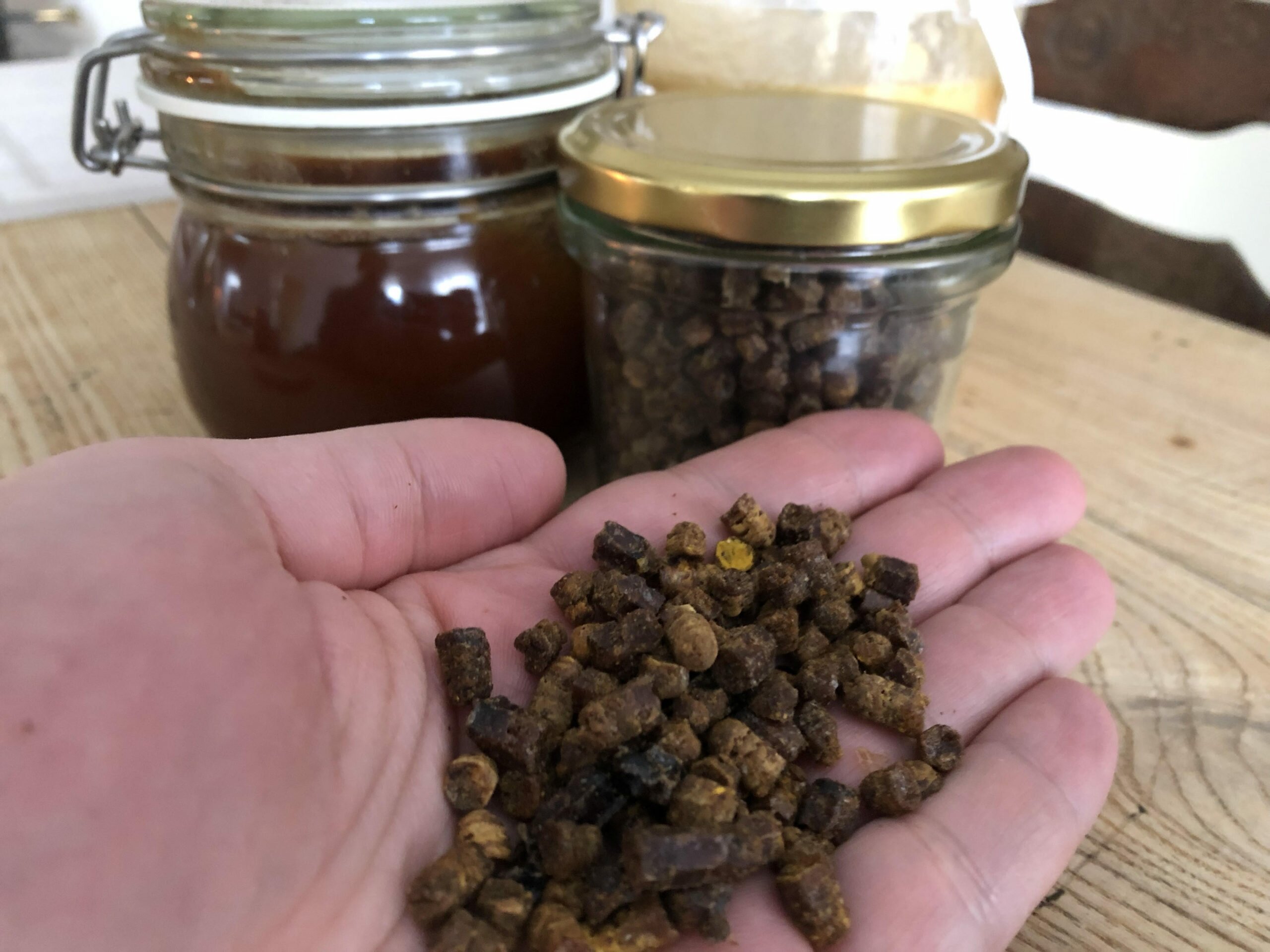
At some point in their lives, everyone has heard of bee pollen and bee bread but not that many know how to store them. Bee pollen is the golden-yellow powder that bees collect from flowers and store in pollen baskets on their hind legs. On the other hand, bee bread, a little bit less popular, refers to fermented bee pollen with a mixture of honey and bee saliva. It actually looks like bits of bread stored in the bees’ honeycomb. If you do decide to buy or harvest either bee pollen or bee bread (which you should totally try if you like honey), these products will need to be stored in a certain way to keep them fresh. Unlike honey, there is a chance for these products to degrade if stored wrongly. So I have put in everything I know on how to store bee pollen and bee bread in this post.
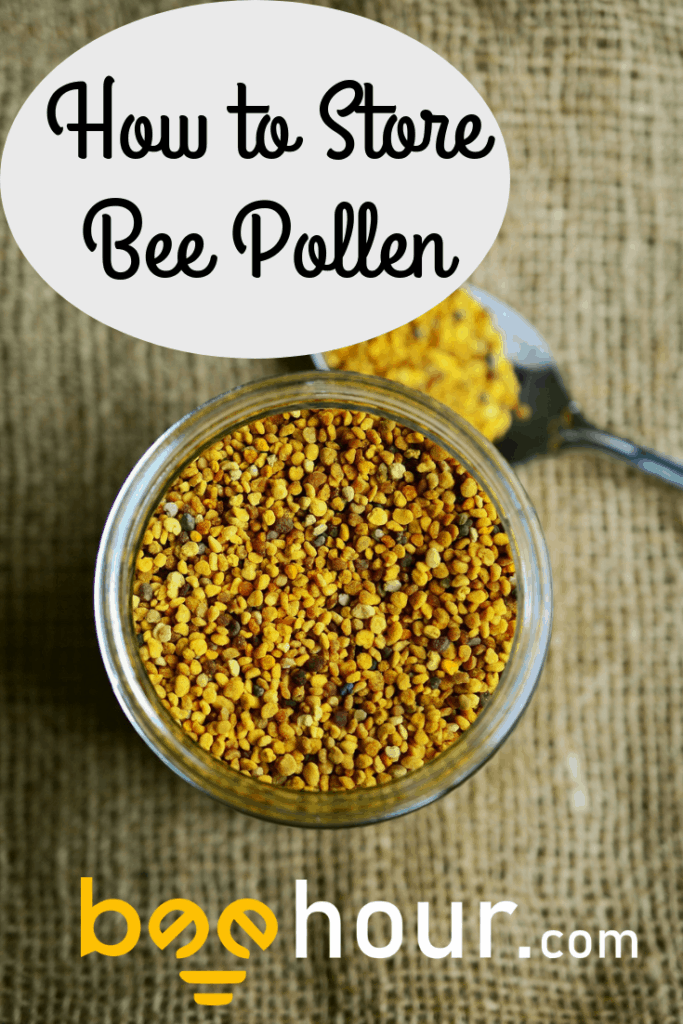
How to store bee pollen? Bee pollen is best stored in a refrigerator or freeze dried. Pollen which has not yet been processed by bees into honey or fermented in the beehive will rot if left in room temperature. Heat-dried or non-refrigerated pollen may also contain contaminants.
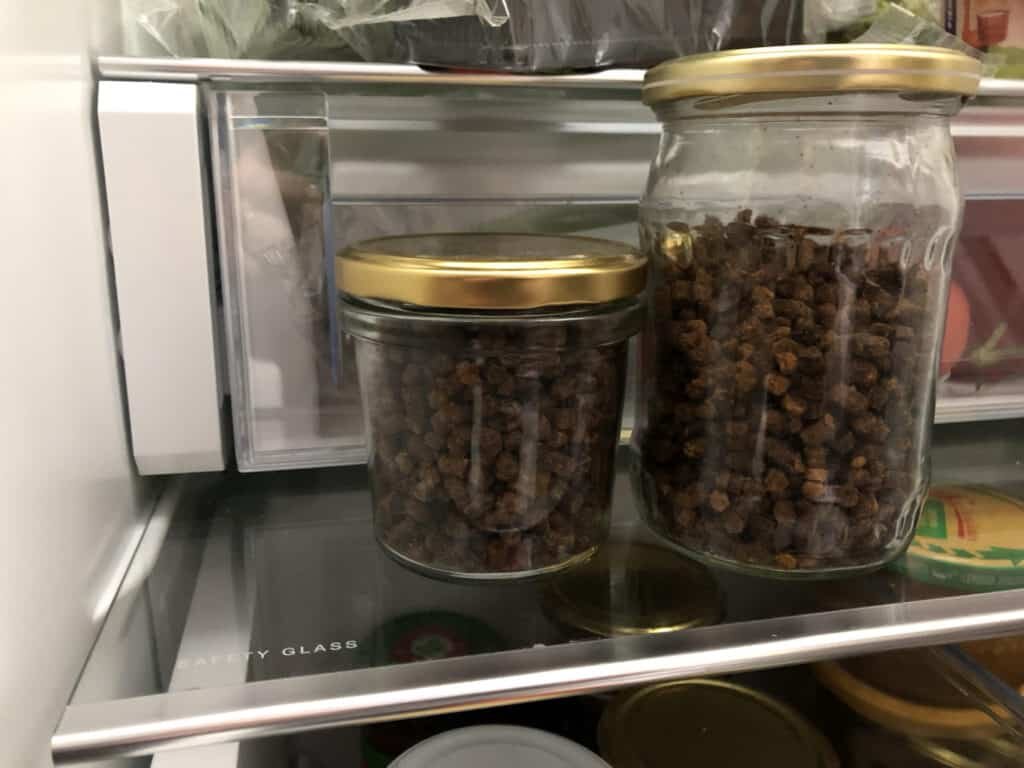
Refrigerating bee pollen in tightly-sealed, opaque glass jars prevents it from going bad, allowing it to be kept for a little over a year. In comparison, this pollen would retain its quality for only a couple weeks if left in room temperature. Texture, as well as taste, are preserved through proper storage of bee pollen.
How to store bee bread? Bee bread should be stored in a jar with airtight lids in a dry, cool and dark place such as a fridge. However, natural bee bread will not only contain raw materials gathered by bees. There will also be live microorganisms and spores in products bees make which will be fine to consume in most cases.
Bee bread is different from bee pollen because it has been fermented by the bees. It has also underwent enzymatic processing by worker bees which mix their saliva into a pollen and honey mixture. The mixture then undergoes lactic acid fermentation which also preserves it from degradation.
In nature, bees also have a way of storing pollen and “bread” in their hives. They use the pollen to make honey and the “bread” as an extra source of food supply. Bees use different processes to make pollen pellets and bee bread. Likewise, the types of flowers that provide bees with their pollen can affect the taste of bee products. Most health food stores as well online businesses, like Amazon, carry bee pollen and bee bread of various types and quality levels.
What is the validity period of bee pollen and bee bread?
If both pollen and bread are stored incorrectly, it will go bad quite soon. You will be able to notice a change in smell and texture. Also, bee bread pieces tend to start sticking together when it goes bad.
When it comes to validity, many would say that pollen and bread, if harvested, processed and stored correctly, shouldn’t go bad for at least 3-4 years. But the thing is, it does lose the nutritional value over time. The rule of thumb that I use – consume pollen and bread during a year since harvesting.
If you are buying your bee pollen or bread, then follow the guidelines of the seller but try to use it up at least within a year if the seller does not state a shorter use period.
How are pollen pellets and bee bread made and harvested?
Every day during the spring, summer, and early fall, worker honeybees set out to gather pollen from thousands of flowers, transferring some of the pollen in the process. They use their long tongues to moisten themselves, which will enable more pollen to stick to the hairy surfaces of their heads and bodies.
Most bees have also pollen baskets on their legs and there, the pollen gets stored in a pressed, compacted form to bring back to the hive. Beekeepers place a pollen trap near the hive, requiring bees to crawl through tiny openings before entering their home. In the process, they drop their pollen pellets which can be gathered in a tray below.
Bees can do many things with the pollen that eventually makes it to the beehive. They mainly use it to raise their brood which requires protein to survive and grow. Some of the pollen is fermented by the bees to preserve its freshness and to make extra food that will last them during the time they cannot venture out of the hive. It also helps insulate and protect the hive. Firstly, the pollen would be packed within a cell and sealed with honey, leaving some space from the top. After some time, another layer of honey is added and all the ingredients below will ferment into what is known as bee bread.
Bee bread is harvested by beekeepers around the same time as honey. The whole comb which contains bee bread is taken and frozen. Beeswax is separated from bee bread with either by machine or manually, using a sieve. The bee bread is then dried for a few days, ready to be packaged for sale or eaten.
Where can you buy bee pollen and bee bread?
Both bee pollen and bee bread can be found at your local farm, at a nearby grocery store selling health foods, and many online markets. The benefit of buying pollen at a local farm is that you know the source of the pollen is local and in season. However, it is often sold fresh and will require you to do the freeze-drying or refrigeration.
I would avoid buying bee pollen at your local grocery store because of quality concerns unless you really know the product you are buying. When buying pollen you must make sure that it is organic. For that, I have used several online sites selling bee pollen: www.beekeepersnatural.com and www.moonvalleyorganics.com. Both of these sites are well known for their variety of high-quality bee products.
Bee bread can be more difficult to obtain if you are not a beekeeper. There are ways to actually make your own bee bread by fermenting your store-bought pollen in a jar of honey and lactic acid bacteria (in place of the normal enzymatic secretion of bees) but that would be too much hassle for most. You can also buy pieces nuggets of bee bread at a local beekeeping farm or at websites such as https://savannahbee.com/. It is among the few websites that sell bee bread in small-sized containers.
What should you look for to pick out high-quality pollen and bee bread?
Of foremost importance for pollen is that it is packaged properly from the time it is manufactured to the time it reaches you. Pollen that is heat-preserved or baked loses much of its nutritional value due to the deactivation of enzymes and degradation of nutrients normally found in fresh foods. Freeze-dried pollen is the best form you can get. Though refrigerated fresh pollen also maintains high quality, it does not last as long as freeze-dried.
The choice of pollen (and bee bread) from local vs. multi-geographic sources both have their benefits. Whereas local pollen is preferred by those wanting to boost their immunity against seasonal allergies, having your pollen come from many geographic sources can provide you with richer flavor and nutritional benefits that cannot be obtained from any single place.
Certain colors of pollen and bee bread indicate which flowers they’ve come from! In the spring, yellow bee bread from Southern California typically comes from golden mustard. In the fall, the same color indicates goldenrod. In certain places, bee bread has been observed to have an assortment of colors ranging from a soft golden hue, to dark caramel colors, to even bright reds and blues.
How do bee pollen and bee bread taste?
Bee pollen is often described as having a floral, earthy, slightly sweet taste. The texture is hard and chewy, like chewing on a dried orange rind. When it becomes bee bread, the floral and herbal notes become stronger due to fermentation, and the texture becomes more moist and chewy. Fermentation also imparts new flavor properties such as tartness and fruitiness, in some cases producing a bee bread that resembles the flavor of a ripe mango!
Keep it cool, dark and dry – it will be fine
If you have never tried bee pollen or bee bread, give it a go, I am sure you will like it. If you are one of those bee product lovers (like me) which cannot live without pollen or bee bread, I really hope that my post was useful. Remember to keep it in a cool, dark and dry place to ensure it does not go bad.
If you have any questions or comments, please leave one below or get in touch with me via the contact form.
Keep buzzing!