
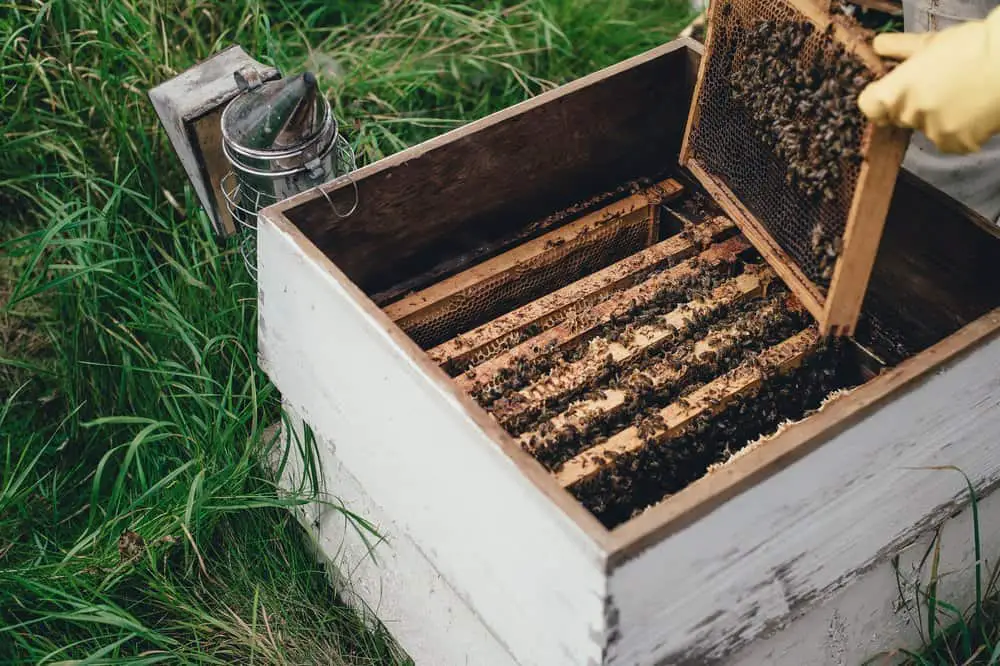
Harvesting honey from a new hive is a milestone every beekeeper is excited to reach! After hours spent researching and selecting the ideal equipment, you waited until the weather was just right, picked the perfect location for the brood box, let in the bees, and cared for them. Now you wait…but how long does it take until you can harvest that first batch of sweet honey from your new hive?
How Long Does It Take to Get Honey from a New Hive? Typically, some amount of honey is ready to be harvested from a new hive within four to six months from when the colony of bees was introduced to the hive. But I recommend that you not harvest at all or keep it to a minimum during the first season.
As you might have guessed, not everything is that straightforward with keeping bees and harvesting honey. Some beekeepers choose to take honey from new hives earlier than others. I believe that the better way is waiting one season before you start harvesting that delicious honey. And let me tell you why.
Why you should not take honey from a new hive during the first year?
At least my goal with the new hives that I set up is simple – establish a strong colony which will be strong enough to make honey for many years to come. And if you are sharing the same goal as me, I would recommend to not harvest honey at all during the first season or to harvest only a very small amount of it.

And the reason for this is pretty simple – bees will need to produce wax and ‘draw out’ the comb. And this alone will use up a lot of their energy. Bee colony will need the comb for the queen to be able to lay eggs so the whole family can grow stronger.
The pace at which bees build combs depends on where are your hives located geographically, accessibility to flora and the weather. If you live south, have a great deal of lowers around your hives and it is supported by sunny weather, you might be able to harvest honey without damaging the bee colony. But by bypassing the first year and waiting until the second season, your bee colony will have more time to establish itself and get stronger. Future harvests will not take as long since the colony will be well established.
How much honey can you expect from your hive?
Average hives produce about twenty-five pounds of honey each year, but in a good season, the yield can be significantly more. When ideal conditions are present, the potential exists for one beehive to yield upwards of fifty pounds of honey.
When you are ready to harvest honey from your new hive, it is important to ensure you have the necessary equipment and you should allow at least three hours for the task. You may want to consider blocking off the day since you are learning a new skill. Only take surplus honey to make sure your precious bees survive and don’t be shocked by the weight, honey is actually quite heavy. Also, make sure to harvest honey without damaging the bees, see my post How to Harvest Honey to learn more.
It is important to highlight that honey bees do not hibernate and, over the winter, they live off the honey stored in the honeycombs. This is why it is crucial for you to only take the surplus during the harvest. If too much is taken, your bees will not have enough to survive and you will start the season with a depleted colony. You can read more about bees living through the winter in my post here – Do bees hibernate over winter?
The stronger your bees, the better your yield should be. Typically, you can expect the harvest at the end of the second season to be as much or more than the first year.

Factors which limit potential for harvesting honey from a new hive
The bees worked hard collecting nectar, you were patient and gave them what they needed, and now it’s time to enjoy the sweet reward! Are you wondering what may have happened to cause your honey yield to be slim to none? You are not alone, many first time beekeepers have unexpected results when they try to get honey from their first hive. These are the most common reasons why the amount of honey from your new hive might be lower than you expected:
- Choosing a low-quality beehive or a beehive which is too big or too small for your bee colony.
- Placing the hive in a spot that does not get enough sun – Giving your beehive enough sunlight and space (at least 10 feet around) is crucial to its success.
- Small mistakes do add up. It is very easy for a beginner beekeeper to make small mistakes that will impact your honey yield. When I started out, a few beekeepers recommend me a couple of books which accelerated my beekeeping journey and saved my bees a couple of times. These were Beekeeping for Dummies (check price & reviews here) and Beekeepers Bible (see price & reviews here). Their cost is really low but the value is huge.
- Not feeding a new colony enough – When you first get your bees, you may need to supplement their nectar with sugar water. Often, bees are weak and depleted after being shipped and need a boost to get going!
- Waiting too long to harvest – Chillier temperatures may cause the honey to become too thick which makes it very difficult to extract.
- Not waiting long enough to harvest – If the bees have not capped off the cells of the honeycomb with wax, the honey will be watery and may spoil. The water from the nectar needs time to evaporate. Moisture and honey are not friends.
- Harvesting too much honey – Not leaving your bees with the reserves they need to get through the winter can jeopardize your colony.
If you made any of the above mistakes, you will want to remedy the situation. Some of the mistakes will be easier to fix than others. For example, if you did not feed the bees enough, make sure you do so this time. If you need to move the hive, do not do so until you have put any and all necessary safety measures into place. The last thing you want to have is a swarm of angry bees looking to come after you! You want their energy going into your second harvest.
Where to store honey from your first harvest?

As a new beekeeper, you maybe wondering what to do with all of the honey you just harvested. Maybe you are in a slight state of shock because you couldn’t picture what 15 pounds of amber colored, honey goodness would actually look like before it was extracted from the hive. You will want to cover it and remove it promptly from the area where your beehive is located. Otherwise, the bees may begin to try and take the honey back! Can you blame them after all the hard work they put in to making it?!
Honey is one of the only foods that will not spoil in its natural state, although ideally, you should find a cool, dark place where it can be stored longer term. It’s also important to track down storage containers that are moisture free and ready to be filled. If purchasing in bulk, make sure you have a place to store any extra containers. Once you’ve filled your containers and found a place to store them, you’ll be faced with a dilemma (a positive one) – how much of the honey do you keep for yourself and how much do you share? Only you can make that decision! Of course, if you had help harvesting, you may want to send your helpers home with a treat. They’ll appreciate it and who know, maybe they’ll even offer to help again next time.
What to Expect as Your Hive Matures?
As long as your hive is healthy and your bees are happily working, your hive should thrive in the years to come! You will continue to put the work and will still worry about the little buzzing bees from time to time, but rest assured, with care and regular attention, your colonies will get stronger and the amount of honey you can harvest will increase. Usually you will be able to harvest honey from their hives more than once a season. But there are several factors that influence honey yield which you must know:
- Climate – warmer climates will have extended seasons and more time to harvest
- Region – while beekeeping is not unheard of in urban regions, it may take more time for the honey to accumulate
- Local flora and fauna – hives located in areas where this is plentiful tend to have more honey to harvest
- Loss of honeybees to other hives – while you can take steps to try to protect your colony, you can’t always prevent some from defecting!
- Marauding – Make sure you harvest before the bees start eating up their own honey.
Strong bee colonies – a key to sustainable beekeeping
I really hope that the fact that you are not going to harvest loads of honey during the first year will not discourage you. On the contrary, the key to successful beekeeping is building and maintaining strong bee colonies. So letting the bees do their work during the first year is an investment. Your bees will be grateful and will yield sweet rewards for many years to come! Take a look at this post here to see other important things that new beekeepers should know when starting out.
I hope that the post was useful and provided a perspective in which I and many other people see beekeeping. If you have any questions or comments, please reach out to me via the contact form.
Keep buzzing!
