
To be a successful beekeeper, deciding on a suitable beehive stand is necessary to ensure the health of your hive. Whether you are new to beekeeping or interested in upgrading your stand, researching the plethora of products can feel overwhelming.
So, what are the best beehive stands? The best beehive stand is the Ultimate Hive Stand for Beekeepers from Farmstand Supply (Check price and reviews on Amazon). This is because it is made from recycled materials, it is easy to assemble and disassemble, it’s durable, and accommodates any bottom board. The best beehive stand on a budget is the Cedar Beehive Stand 8-frame by Better Bee (see more here). This is because it is durable and it will protect the bottom board of your hive from moisture.
I found all the extensive information online to be helpful. I’ve condensed everything you’ll need to consider in the article below to help your transition to beekeeping smooth and stress-free.
The Best Beehive Stands Available Today
Unless you make your own beehive stand, a store-bought stand can range in price from 15 to 100 dollars.
The Overall Best Beehive Stand
The overall best beehive stand is the Ultimate Hive Stand for Beekeepers from Farmstand Supply.
This hive stand can be bought to accommodate an 8-frame or a 10-frame beehive. The stand is made of technopolymer, which is a material designed to withstand the worst type of weather: it can not rot, rust or be eaten by termites
The Ultimate Hive Stand comes with frame holders to hang your frames while allowing you to inspect your hive easily. The stand is also built with a drain that will gradually get rid of moisture in the hive.
This stand has everything you need: durability, accessibility, looks nice and gives your hive a fantastic amount of stability.
The Best Budget-Friendly Beehive Stand
The best budget-friendly beehive stand is the 8-frame Cedar Hive Stand by Better Bee. This is because it is made from cedar which naturally fights against insects and is incredibly durable.
The stand will protect your bottom board from moisture and offers great stability to your hive. The front also has a built-in landing ramp making it more accessible to your bees. It is on the smaller side which allows it to blend in nicely with its surroundings.
If you’re on a budget, this stand offers great value for money. To compare all our favorite beehive stands, check out this chart:
| Product | Pros | Cons |
| Ultimate Hive Stand for Beekeepers from Farmstand Supply | ● Sits 12 inches above the ground. ● Can support very heavy 8 and 10-frame hives. ● 100% recycled materials. ● Won’t rust, rot or be damaged from termites. |
● Some assembly required. ● Takes up vertical space. ● On the pricey side |
| Man Lake HD-709 Adjustable Hive Stand | ● Made from high-quality steel. ● Can be easily broken down for storage. ● Zinc coating prevents deterioration. ● Circular feet so it won’t sink into the ground. ● Can accommodate both 8 and 10-frames. |
● Fairly heavy. ● Fairly low height at 6.5 inches. ● Assembly required. ● Could eventually rust if it’s not maintained. |
| 8-Frame Hive Stand from Toughtimbers | ● Made from pinewood making it environmentally friendly. ● Light weight. ● Inexpensive. ● Able to handle the beehive during heavy nectar flow. ● Made in the USA. |
● Low to the ground. ● Assembly required. ● Can only accommodate an 8-frame hive. ● Eventually will rot |
| Cypress Hive Stand by Foxhound Bee Company | ● Made from Durable Cypress Wood. ● Added landing platform for the bees. ● Inexpensive. ● Already assembled. ● Can hold heavy hives. |
● Low to the ground. ● Made from wood so it would eventually rot over time |
| 8 Frame Cedar Hive Stand by Perfect Bee | ● Made from rot-resistant cedar. ● Offers a landing ramp for your bees. ● Will protect your bottom board from moisture. ● Affordable. |
● Low to the ground. ● Assembly required. ● Will eventually rot over time. |
| Black Plastic Beehive Stand by Vivo | ● Made from plastic ● Will not rust or rot. ● Raises the hive off the ground. ● Sturdy design. |
● On the pricey side. ● Some assembly required. ● Will only accommodate a 10-frame hive. |
| Harvest Lane Honey Plastic Bee Hive Stand | ● Made of plastic. ● Also has metal rests for ultimate stability. ● Lightweight. ● Durable. ● Dimensions are 2 20 x 12 inches. |
● On the pricey side. ● Assembly required. |
After researching different types of stands I found that the Ultimate Hive Stand for Beekeepers and the Man Lake HD-709 Adjustable Hive Stand were the two recommended stands.
Pro Tip: If you decide on a wooden stand, raising the base of each leg off the ground will prolong the life of the wood. Try placing the legs on audio speaker rubber vibration foot pads.
The stands above are all single-use stands. Single-use stands are the popular choice when you’re looking for a store-bought hive stand. If your heart is set on a shared hive stand, building it yourself is a great option.
How to Choose A Beehive Stand
There are so many different products on the market it can become a daunting task for a rookie beekeeper. Don’t feel discouraged or let this turn you off beekeeping.
A few details to consider:
● Height
● Weight
● Material
● Dimensions
Beehive Stand Height
The height of your stand should be high enough to deter pests but low enough so you can lift the honey supers out of the hive because of course, you’ll want that honey. You should never use a stand that requires you to climb any step stool or ladder to reach it. The height can also mean less stability.
A good height is around 18 inches, a minimum is 4 inches.
Materials for the Best Beehive Stands
Beehive stands are made out of three materials:
- Wood
- Plastic
- Metal
Wood is a great material because it is strong and aesthetically attractive. Typically the wood will need to be coated in wax or oil to prevent rotting. They will be made from pine, cypress or cedar.
Plastic stands are an attractive option because they are lightweight, durable against the elements and inexpensive. If the plastic aspect throws you off due to environmental reasons, many of the plastic stands are made from recycled material.
Lastly, metal is a great third option. Metal does well in both hot and cold temperatures and can hold much more weight.
Beehive Stand Dimensions
The dimensions of your stand are influenced by the weight and size of your hive. As more honey is made the hives become heavier, a single beehive can weigh up to almost 200 pounds. There are two main types of hives, an 8-frame hive and a 10-frame. These vary in weight and size which will influence the size of your stand and whether to use a four-leg stand or two.
Why Do You Need A Beehive Stand?
Hive stands protect your beehive from the elements. A stand will keep your hive dry after a rain or snow storm because it will be above the wet ground. Without a stand, the water from the ground would seep into the bottom of the hive and eventually rot the wood.
The stands are made for durability and won’t easily tip over during a storm.
For protection, hives in the wild are rarely seen on the ground and if they are it won’t last long. The stands also mimic the height that they require in the wild.
The height also gives the hives better ventilation and airflow which will create the right temperature and humidity. A warm bee is a happy bee.
Battling predators is a common problem with beekeeping. They either steal the honey or eat the bees themselves. A beehive stand will help you win the war.
A common predator to watch out for is the nosema apis which is a bee parasite that thrives in damp ground. A stand will also help prevent ants and other unfriendly insects.
Not only do the stands benefit the bees, but they also help you in maintaining and cleaning the hive. The misconception on raising bees is that it’s a passive activity that requires little
maintenance, the reality is that you will be busy and it requires a certain amount of lifting.
Owning a stand will mean less bending, crouching, and kneeling. Phew!
Types of Beehive Stands
Beehive stands are fairly straight forward. The stands are a framework to support your beehive above ground. The frames are made for strength and durability, not height.
There are many different products to look into but the two main types of frames you will see are shared hive stands and single hive stands.
Single Hive Stands
A single hive stand is a small stand that will only support one hive. The benefits of a single stand allow for more flexibility in moving the hives around. If you wish to keep them farther apart, a single stand allows that. It also gives centralized support to the hive.
On the downside, keeping hives clumped together in the winter will increase the survival rate of your hive. Meaning, you’ll need to move each hive together individually. This, of course, is no major obstacle; it will just require extra lifting.
Shared Hive Stands
A shared hive stand allows for multiple hives to be supported by one frame.
The benefits of a shared hive stand are the convenience of multiple hives in one place. This can allow for more protection and warmth during a storm and winter.
If you’re planning on building your own stand, a shared hive stand cuts cost on wood.
The flip side is that the shared stand doesn’t offer centralized support and could make it more difficult to move around the hives. You could also end up disturbing the other hives while you’re maintaining one of the hives.
Both stands have their pros and cons, it essentially comes down to preference. For a beginner beekeeper, I’d recommend starting out with a single stand frame. They’re more manageable and easier to build if that’s an interest for you.
The Making Of A Beehive Stand
If you’re on a budget, building a stand can help you cut down on costs. However, this section will walk through the materials used to build a beehive stand to help you better understand one
you may be purchasing, too.
Only build a stand if you are confident in your construction abilities.
Materials
The type of wood to use will depend on three factors:
- Region
- Budget
- Durability
Any type of wood can be used for a beehive stand, but there are four different types that are best to use for strength and durability.
Popular wood to use:
● Pine
● Cedar
● Cypress
● Spruce and Fir
Pine
Pinewood is the popular choice because it is inexpensive and available everywhere. Pine will need several coats of paint to become water-resistant.
Knotty (standard pine) is the least expensive choice to buy. This is because the wood has knots in it and other imperfections. If a rustic stand is the look you’re going for, then, by all means, save a few bucks.
Buy extra standard pine because the knots could get in the way.
Clear pine (premium pine) is just as it’s named. This pine is a bit more expensive because it has zero knots and blemishes. This will be easier wood to work with because you won’t need to work around the knots.
Cypress
Cypress is a fantastic choice because the tree produces a sap-type oil that naturally repels insects and mold. Giving the wood an extra layer of waterproof protection is recommended, but
not necessary. It’s incredibly durable but more expensive.
Spruce and Fir
Spruce and fir are considered stud grade lumber, which means the wood is used when high strength is required for a structure. They’re best used for making frames.
Cedar
Cedar, cedar, cedar- this wood is a wonderful choice. This tree also creates natural oils to repel bugs and is less prone to warping. It’s not necessary to paint it because of its natural durability.
Synthetic Wood
This type of wood has grown in popularity for beehives because it’s made from recycled plastics, it’s weatherproof and durable. It’s a great choice for a hive stand.
Recycled wood can be used to cut costs and help save the environment!
Wood to Avoid
This is slightly more important for making a beehive box but nevertheless, it’s something to keep in mind while choosing the wood for your stand.
It’s hard to find any hard evidence but there is talk that specific types of natural wood, like black walnut, can be toxic to bees.
However, the sawdust from black walnut, mahogany and unfortunately cedar can be toxic to you. Be safe if you’re working with any of this wood.
Pressure-treated wood is toxic to the bees. Pressure-treated wood is wood that has been infused with preservatives to protect the wood from rot and insects. The wood is placed in a depressurized holding tank which sucks the air out of the wood and replaces it with chemicals.
Bees are insects, so you see the problem there.
You can use it for the stand but I’d rather you didn’t. If you are going to use pressure-treated wood you’ll want to paint it multiple times for safety.
Cinder Blocks
Using cement cinder blocks as a beehive stand is very common because they’re strong and weatherproof.
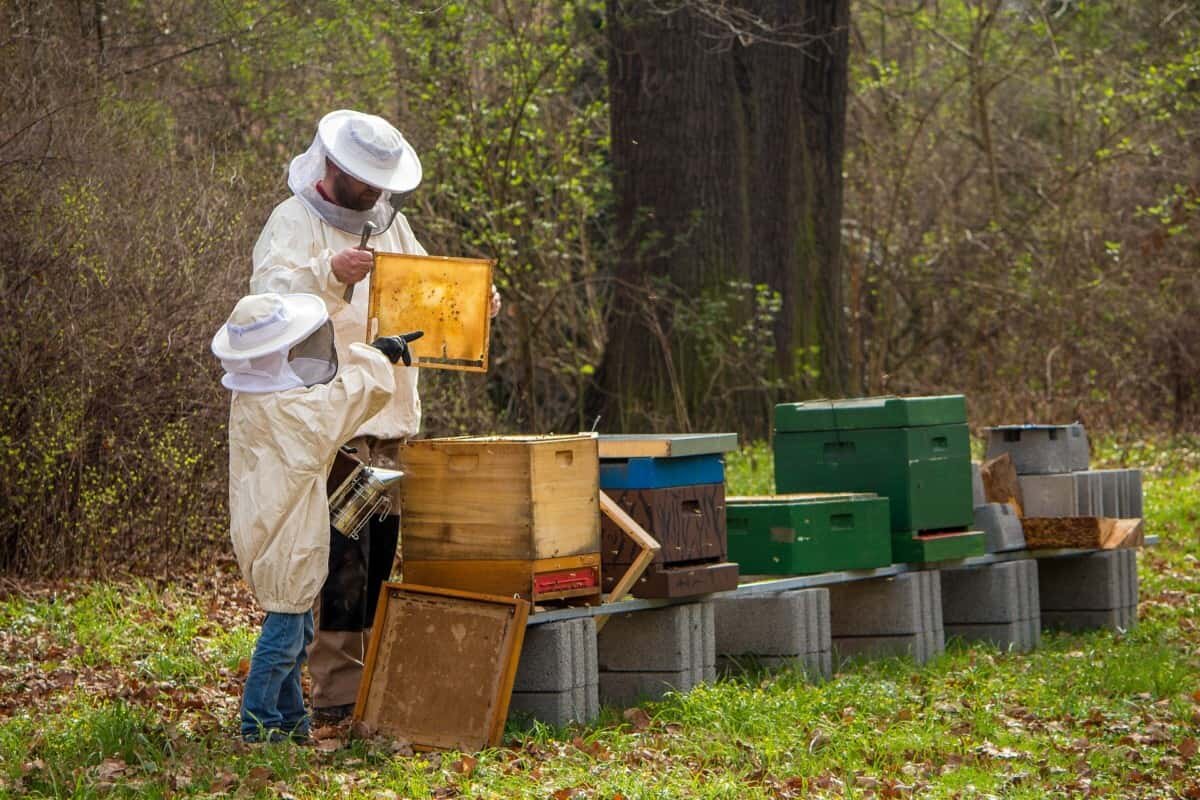
A common way to build a shared hive stand is with cinder blocks stacked on top of each other to support planks of wood. The beehives then rest on the wood.
Cinder blocks save heaps of money and are quick ways to build a stand.
If you’re not handy in construction and still determined to make your own, using cinder blocks is an easy way to start.
Primer
If you decide on a wood base, you’ll need to coat the wood in an exterior grade primer and an exterior grade latex paint. This will protect your wooden base and make it pretty.
Painting your hive stand a high quality exterior paint that is either oil based or latex based should do the trick.
A second option is polyurethane varnish. Many prefer an oil-based Polyurethane because it’s a durable finish that is heat, scratch and chemical resistant. The resulting finish is effective but isn’t a flexible varnish and could crack overtime.
Alternatively, marine spar varnish also works well. You’ll want to add a few coats to the wood for ultimate protection against the elements. You can buy it either glossy or matte finish.
There are quite a few options for waterproof resistant varnish, I’d recommend digging through the internet a bit more or talking to an expert.
Getting the Best Beehive Stand for Your Hive
I hope this article has helped direct you in your decision on a beehive stand. The stand is usually overlooked, but it’s actually an extremely important part of caring for your bees. By choosing the best beehive stand for your hive, you will have happier, healthier bees. Caring for them well will also be easier with a nice hive stand.
Beekeeping is a wonderful and fulfilling hobby that needs more people like you. Take good care of your bees!